Annual Financial Planner: A Designer's Tool for Visual Clarity
Transforming complex financial data into a clear, actionable, and visually engaging document is a hallmark of excellent design. An Annual Financial Planner is more than a spreadsheet; it's a foundational tool for personal and professional organization that, when designed well, empowers users to take control of their finances with confidence. For graphic designers, creating or selecting such a template presents a unique opportunity to apply principles of visual hierarchy, typography, and color theory to produce a resource that is both beautiful and supremely functional.
The Role of Visual Design in Financial Planning
Effective financial management requires clarity and focus, qualities directly influenced by the document's design. A well-crafted planner uses strategic design elements to reduce cognitive load and guide the user's eye to the most critical information. This is where the expertise of a graphic designer becomes invaluable. The goal is to create a system where data is not just stored but communicated effectively, turning abstract numbers into a clear narrative of income, savings, goals, and expenditures. This process strengthens the user's engagement with their own financial health, making a mundane task feel organized and even empowering.
Practical Applications for Designers and Creatives
The principles behind a financial planner's design extend far into various creative projects. Understanding how to organize dense information is a core skill applicable across multiple domains:
- Brand Identity & Stationery: For businesses, a branded financial planner or budget template can be part of a cohesive identity system, reinforcing professionalism and trust.
- Marketing & Editorial Design: The layout techniques used for clear financial charts and categories are directly transferable to infographics, annual reports, and data-driven marketing materials.
- UI/UX Design: Creating an intuitive flow within a printable planner mirrors the process of designing user journeys in apps and websites, where clarity and ease of navigation are paramount.
- Packaging & Merchandise: A beautifully designed planner can become a desirable digital product or a physical merchandise item, showcasing how functional design adds tangible value.
- Social Media & Presentation Design: Skills in visual hierarchy and clean typography are essential for creating compelling social media graphics and professional presentations that hold an audience's attention.
Key Design Considerations for an Effective Planner
When evaluating or creating an Annual Financial Planner template, several design factors determine its success. The interplay of typography, color, and composition creates the overall user experience. A clean, sans-serif font often enhances readability for numerical data, while a strategic color palette can highlight key sections or differentiate between income and expenses without causing visual clutter. The use of ample white space is critical; it prevents the layout from feeling cramped and allows each section to breathe, improving scannability. Furthermore, a logical visual hierarchy ensures that headings, subheadings, and data fields are instantly distinguishable, making the template intuitive to use without a manual.
Integrating the Planner into a Modern Design Workflow
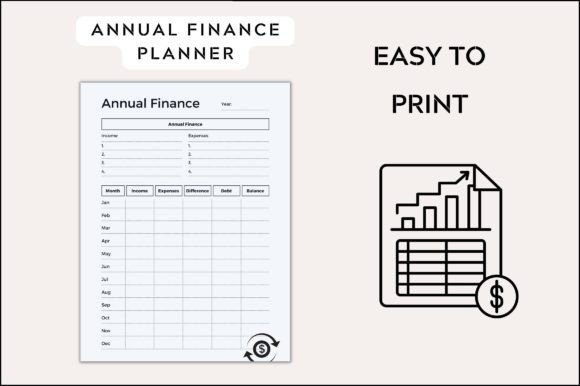
A premium, printable template in A4 standard size, like the one described, is a versatile asset. Its value lies in its "ready-to-use" nature, saving precious time in the design workflow. However, its true potential is unlocked through thoughtful customization. A designer can adapt the color variants to match a client's brand palette or adjust the layout to emphasize specific financial goals. This flexibility makes it a powerful component of a larger creative project, whether for a client deliverable or a personal branding exercise. By selecting a template with a strong, modern aesthetic and a clear structure, you ensure the final output is not only functional but also aligns with contemporary design trends and professional presentation standards.
Ultimately, the choice of a creative asset like a financial planner reflects a commitment to quality and order. Thoughtful design choices in such functional documents do more than please the eye—they build trust, enhance communication, and provide a clear framework for success. Investing in well-designed tools is an investment in a smoother, more efficient, and more visually coherent design process, elevating both the creator's work and the end-user's experience.