Real Estate Buyer Questionnaire Template: A Design-Centric Approach
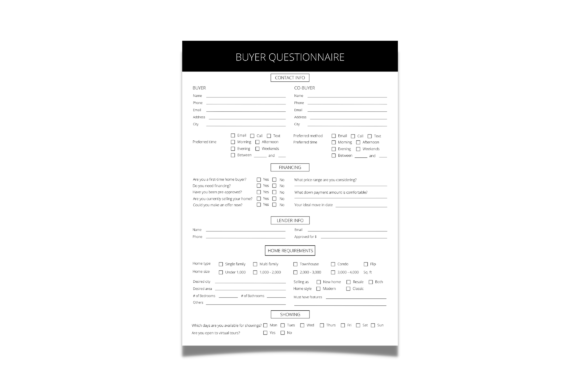
In the fast-paced world of real estate, the initial client intake is a critical moment for branding and communication. A thoughtfully designed Real Estate Buyer Questionnaire Template does more than gather information; it establishes your professional identity, sets a tone of efficiency, and creates a seamless user experience from the very first interaction. Moving beyond generic forms, a premium, editable template transforms a routine task into a powerful touchpoint for visual branding.
The Role of Design in Client Communication
Every document your agency sends is a reflection of your brand. A generic, poorly formatted questionnaire can undermine credibility, while a polished, on-brand document reinforces trust and professionalism. This is where graphic design principles become essential. The right template ensures visual hierarchy, guiding the client’s eye through questions logically. A harmonious color palette and consistent typography align the form with your logo, website, and other marketing materials, strengthening your overall brand identity.
Practical Applications Beyond the Basics
While its primary function is client onboarding, a well-structured questionnaire template has versatile applications across your creative projects:
- Marketing & Branding: Use the design framework for other client-facing documents like welcome packets, feedback forms, or service agreements to maintain a cohesive brand system.
- Digital & Print Flexibility: Editable in Canva, these templates are designed for modern workflows. Customize and send as a PDF for digital convenience or print high-quality copies for in-person meetings. The A4 size is easily resizable for different needs.
- Agency Collaboration: Standardize intake processes across your team or with partner agencies, ensuring every client receives the same high-quality, branded experience.
Key Design Elements for Maximum Impact
When selecting or customizing a template, focus on these core design elements to ensure effectiveness:
Typography and Readability
Choose clean, professional fonts that balance personality with legibility. Use a clear typographic scale to distinguish headings from body text, creating a comfortable reading flow. This is fundamental to UX design principles applied to print.
Color and Visual Harmony
Integrate your brand’s primary and secondary colors. Use color strategically to highlight section headers or call-to-action areas, not just for decoration. This enhances the visual hierarchy and makes the document more intuitive to complete.
Composition and White Space
Ample white space prevents the form from feeling cluttered and overwhelming. A balanced layout, with logically grouped sections, improves both the visual design and the user’s ability to provide thoughtful answers.
Optimizing Your Design Workflow
A premium, editable template is a valuable design asset that saves significant time. Instead of starting from scratch, you begin with a professionally crafted foundation. The key to maximizing this asset is understanding what’s editable:
- Full Customization: In Canva, you can easily modify images, fonts, colors, elements, and background colors. This allows you to tailor the template perfectly to your specific brand guidelines.
- Multi-Format Export: Download your final design in the format that suits your need—PNG, SVG, JPG, or PDF. This flexibility supports everything from web embedding to high-resolution printing.
The value of a well-designed questionnaire extends far beyond data collection. It is an exercise in professional presentation